.jpg)
When I was stupid and 20-something, I had an editorial fellowship as a staff arts and culture writer for Seattle Weekly. Prior to this, I was the books editor and a freelance arts and culture writer for Portland, Oregon’s alt-weekly, Willamette Week.
This was in the pre-Instagram era; MySpace was still a thing. I didn’t even have a Facebook account because it felt like it for college kids. I was a professional writer when you could technically make a living doing so, if you were the books editor and knew how to work the system.1
The media landscape in 2007-2008 was a different beast entirely, and I was working someplace where everyone knew that my words would actually be seen. Every day, we got a box of promo CDs from bands; every day, I got a box of books from authors passing through town. (Occasionally, who we wrote about was 100% arbitrary: maybe the graphics department needed us to highlight a Wednesday event to even out the layout; maybe we needed to beef up one of the listings to fill out the rest of the page. These ideas would percolate and find a home in my first book, Can You Learn to Be Lucky?).
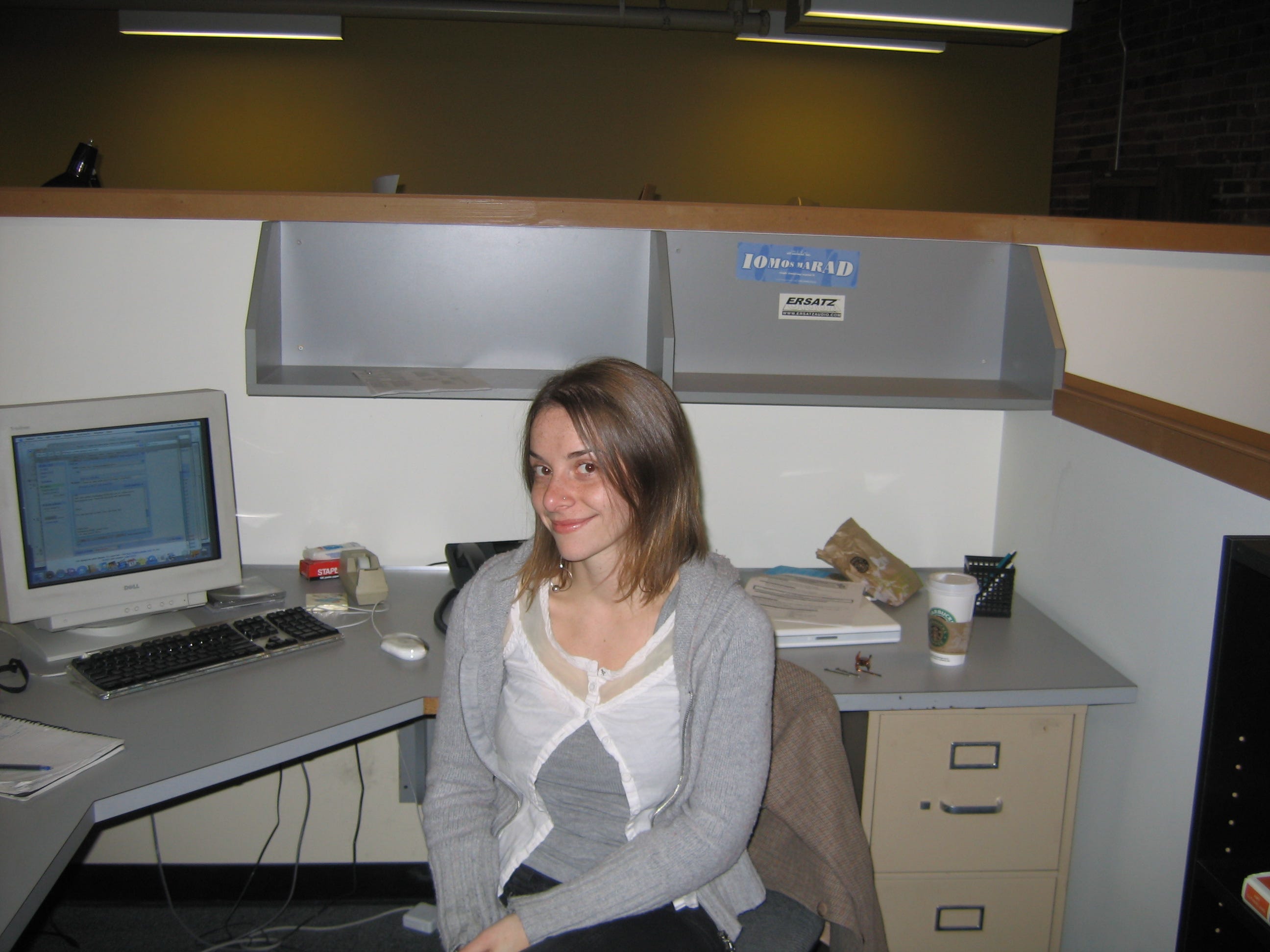
When you’re a music writer in the Northwest, everyone’s brother has a band they want you to know about
“Everyone” included the woman sitting next to me.
“You should see my brother’s band, they’re playing tonight!” Aja said.
By then, it was the 2,339th time someone had asked me to see their brother’s band.
Sadly, I was on deadline for my first cover story, a piece on a local music recommendation tech startup that would later get acquired by Microsoft. I was knee-deep in algorithms—Pandora, Last.fm.
We were in Seattle, site of so much music AND tech, in an era when iPod sales were soaring but we were still getting buckets of free CDs. Things were changing—I’d interviewed Chris Anderson, Wired’s editor-in-chief about his book, The Long Tail a few months before to get his take on the digital revolution—and my story felt so godly important.
“I would, but I’ve got to finish this article,” I said. I was ambitious and I wanted to be promoted to staff writer after the fellowship and I just couldn’t spare a few hours.
I didn’t go with my friend to see her brother’s band.
Two years later, Fleet Foxes was on Saturday Night Live.
The Starr Report is a reader-supported publication. To receive new posts and support my work, consider becoming a free or paid subscriber.
Say yes to the side quest - but not all side quests are created equally
“Say yes to the side quest” is now one of my main mantras in life. It’s as Kurt Vonnegut wrote in Cat’s Cradle: “Peculiar travel suggestions are dancing lessons from God.”
I declined because I’d convinced myself that I needed to get into a “flow” state to write the article well and get that job. I gave up the chance to see Fleet Foxes before they were Fleet Foxes; before my former cube-mate, Aja, had a story to tell about seeing Neil Young at a barbeque (!).
That’s when I realized that I’d done this years before. When I was in Houston, Texas while training Teach For America, a group of friends were driving to Graceland for the weekend.
“Sorry, I have to finish this assignment.”
The assignment could have waited.
At the time, I thought that Graceland could wait; Graceland wasn’t going anywhere, but the deadline had a hard stop. The assignment felt like the fleeting thing, but that was the wrong way to look at it.
The choice wasn’t Graceland vs. assignment, it was “Graceland with this specific group of people during this unique time in life vs. assignment.”
Never Turn Down the Opportunity to Experience Collective Joy
After I realized that, I started using this as a decision-making heuristic: when given the choice between multiple things, do the one that can’t be repeated later, or is somehow ephemeral in nature.
- See the live show
- Meet up with the person passing through town
- Go to the event, the conference, the dinner
- Stop and say goodbye to someone, because we have absolutely no way of knowing how many times we’ll get to see that person again
- Do the thing that connects you to the present moment
Recently, my three month stint in Marrakesh, Morocco coincided with the 2026 World Cup. Taking this advice paid off handsomely when I got to experience the collective joy of when the Atlas Lions beat Canada, 3-0. Here are some clips from that day:
Minimize Regrets
To wit: my college boyfriend ‘s father had a simple surgery, scheduled for the same Saturday afternoon as one of his baseball games. Dad was a doctor at this hospital, so thought nothing of driving himself there; mom was going to drive by later to pick him up. After standard teenage boy delays, boyfriend and mom agreed that they wouldn’t have time to stop by the hospital before the game; they’d see him later, after he woke up from surgery.
The surgery was fine—but labels and numbers were not. His patient charts were misread, and he received excessive morphine for several days. By the time the error was recognized, he had suffered severe brain injury from prolonged oxygen deprivation and was ultimately pronounced brain-dead. And this was at the hospital where his father worked as a doctor.
“I don’t think we’ll have time to say goodbye before the game” haunted him.
There’s obviously a fair amount of survivorship bias at play—I’ve taken many side quests that have turned out to be great bags of nothingness—but the side quest is one component of a psychologically rich life, a measure of life satisfaction beyond happiness.
If you can’t decide ever there’s a conflict between two things that can’t be repeated later, choose the rarer thing. Opt for the fleeting thing that you can’t do in the morning, or any other time.
Tempus fugit. So make the most of it.